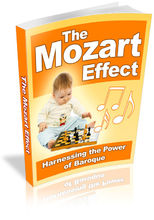
BABY - THE MOZART EFFECT - HARNESSING THE POWER OF BAROQUE!
Who Was Mozart?
Wolfgang Amadeus Mozart was born on January 27, 1756 in Salzburg,
Austria, and died a premature death on December 5, 1791 as a 35-year old.
His musical brilliance was seen very early in his life when, as a four or five
year old he wrote his first composition Andante in C.
During his short lifespan Mozart managed to compose 600 composition
works. Many believe his music to have been the pinnacle of concertante,
symphonic, chamber, operatic, choral and piano music.
Love him or hate him, but Mozart has left a legacy that is still appreciated by
music lovers and students of music to-date. There is no doubt, even among his
critics that Mozart composed his best work shortly before his untimely death.
The Requiem is one of these pieces.
Joseph Haydn, another classical composer well known and appreciated for his
musical talents wrote about Mozart: “posterity will not see such a talent again
in 100 years."
What is interesting to note is that Mozart showed manic depressive tendencies
throughout his adult years. Perhaps it is this close encounter with madness that
enabled his extraordinary talents? Fact is, he was talented beyond his age and
time.
Inside The Mozart Effect
The Mozart Effect came about thanks to Dr. Alfred Tomatis' research. He
analyzed the effects of Mozart's music on children who suffer from
communication and speech disorders.
Thanks to Dr. Tomatis' findings the term Mozart Effect was coined; in its
basic description it signifies the transformational power of music in education,
well-being and health.
Since the Mozart Effect became known as a special method to deal with
cognitive education for small children and those who suffer from disorders
such as dyslexia, autism, ADD, mental disorders, listening disorders, injuries
and physical disorders much has been said and written about the term.
To-date the academic world is torn between results of the research that has
gone into the Mozart Effect since its inception. While some researchers found
it to be based on truth, others dismissed it as hearsay after doing extensive
testing themselves. You'll learn more about either side of the argument within
the scope of this eBook to help you understand both sides.
Mozart's distinctive Baroque music is used to soothe the mind, induce sleep
and relaxation, reduce depression, anxiety and stress, improve awareness and
memory and awaken the body.
4.95
USD
InStock