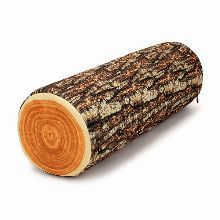
MISC - Wood Working 101 WOOD IS A LIVING THING - IT TAKES SPECIAL HANDS AND KNOWLEDGE TO HANDLE IT
Introduction To Woodworking
Woodworking encompasses a great number of diverse activities, including turning, woodcarving, marquetry, cabinetmaking and joinery, however, every specialist craftsman or craftswoman has at some time mastered the fundamentals of measuring and marking, dimensioning, assembling and finishing – considered the basics of woodworking skills that are the core of any woodworking calling.
The ability to think in three dimensions is needed to mark out the wood for a project and to imagine how one component fits with another and in what order is required of a woodworker. You will also need to know which tools will give the best results, depending on the level of accuracy required and the properties of the wood you are using.
Dimensioning is the process of reducing raw materials accurately to size. This almost invariably entails planning components square and true – a procedure that is simple in principle but takes a lot of practice to become perfect.
Cutting and assembling a variety of joints are part of all but the simplest of woodworking projects. Long been regarded as a measure of a woodworker’s skills, joinery needs a steady hand-eye coordination, but experience will tell you the best way to fasten one piece of wood to another attractively and discreetly without sacrificing strength.
One necessary addition to these pivotal skills is an appreciation of how wood behaves. It is a unique, living material that continues to swell and contract with changes in humidity, a factor that a woodworker must deal with in the design and construction of every project. Some woods are easier to work with than others, and each piece, regardless of the species, is exclusive in the way the grain turns and twists.
There is no one right way to do anything in woodworking. The right way is the way that works best for you and what works best is a balance between the time something takes, the tools available, the pleasure you take in the process and the quality of results you are looking for.
There are arguments for both the use of hand tools and the use of machines for woodworking. Some say that using hand tools allow you to develop the ‘knack’ of cutting and shaping wood without tearing the grain. While other woodworking experts proclaim that you can often complete a project in less time with hand tools because of the set up required for the mechanical tools. Others believe just the opposite. We will discuss both options, hand tools and machine tools in this book.
With a little patience, the right tool and techniques and a good set of plans, you don’t have to be Bob Villa to build something you’ll treasure for years to come.
Grab Your Copy For Only . . . $9.95 I know you will get something from this well written eBook!
Remember: Knowledge is power - And Great Knowledge is Powerful. When reading an eBook can
MOVE you - Isn’t that feeling worth the price of the wonderful read? ENJOY! APPLY! SHARE!
4.95
USD
InStock